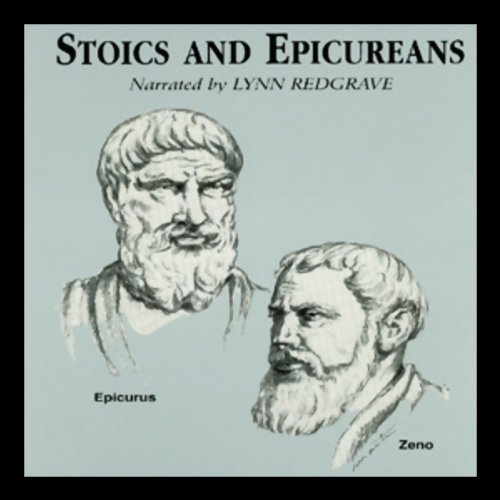
Stoics and Epicureans date from the Hellenistic period, but the debate between these two modes of thought continues today. For the Stoics, the goal of human life was to align one’s nature with the rational order of all things by cultivating pure reason. Through the practice of dialectic, they aimed for ethical righteousness and self-control. In sad or turbulent times, stoical endurance has appealed to many people as a way of coping. The Epicureans also valued moderation, but they were suspicious of overly sophisticated intellectual debate, relying more on sense impressions to establish truth. Concluding that life is simple and its truths easy to perceive, they sought a life of minimum pain and maximum pleasure by rejecting external pursuits in favor of lasting inner values, like wisdom, honor, and peace of mind. ©2006 1995 Carmichael and Carmichael, Inc. and Knowledge Products (P)2006 1995 Carmichael and Carmichael, Inc. and Knowledge Products