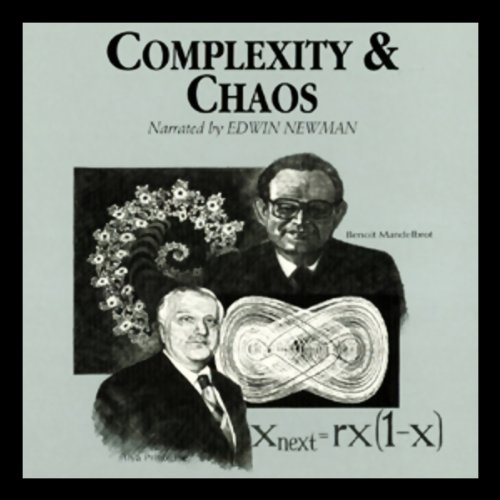
Newtonian physics described a regular, clock-like world of forces and reaction; randomness was equated with incomplete knowledge. But scientists in the late 20th century have found patterns in things formerly thought to be “chaotic”; their theories help explain the unstable, irregular, yet highly structured features of everyday experience. It now seems likely that randomness and chaos play an essential role in the evolution of the living world and in intelligence itself. The Science and Discovery series recreates history’s 4,000-year journey to better understand the world through scientific means. Scientific discovery has often disrupted conventional wisdom. This is a story of vested interests and independent thinkers, experiments and theories, change and progress. Don’t miss the rest of the Science and Discovery series. ©1993 Carmichael & Carmichael, Inc. and Knowledge Products (P)1993 Carmichael & Carmichael, Inc. and Knowledge Products